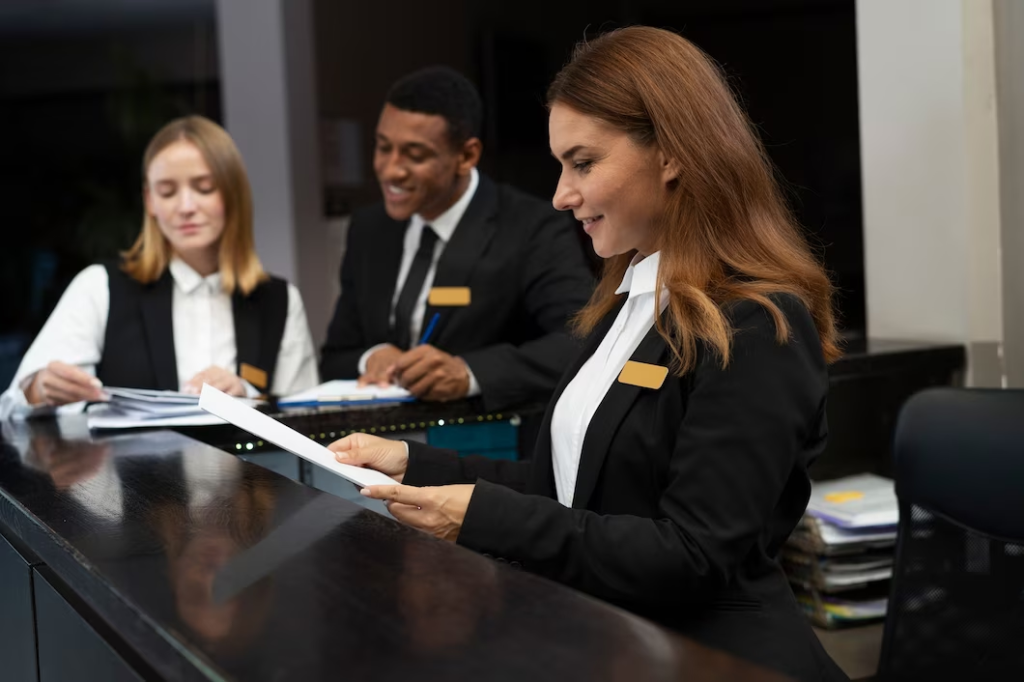
A guest throws a drink in the lobby. A housekeeper feels unsafe entering a room. A late-night desk clerk faces a man pounding the counter, demanding keys.
If you’re a California hotel operator, these aren’t movie scenes. They’re real incidents happening daily in properties just like yours—and under SB 553 (California’s workplace violence law), they now carry six-figure risks if your training doesn’t hold up.
Here’s the truth:
Generic workplace violence training isn’t just weak. In hotels, it’s financial suicide.
In July 2024, California rolled out SB 553, mandating every employer to:
Create a Workplace Violence Prevention Plan (WVPP)
Maintain a Violent Incident Log
Deliver role-specific, worker-informed training
Keep records Cal/OSHA can audit anytime
And by Dec 31, 2026, the permanent standard drops—meaning Cal/OSHA will tighten the screws even more.
📌 Translation for hotels: If your vendor gave you a “one-size-fits-all” PowerPoint and a sign-in sheet—a classic Module #187, check-the-box approach—you’re already out of compliance and exposed.
Hotels aren’t warehouses or office parks. They’re living ecosystems with shifting risks (front desk, housekeeping routes, bars/pools, night audit)—and Cal/OSHA’s workplace violence policy expects you to address those specifics.
Every role faces different dangers
Housekeepers walk into strangers’ rooms alone.
Night auditors work isolated shifts.
Bartenders face intoxicated crowds.
Front desk staff take the first wave of aggression.
A generic webinar treats all of them the same.
The law demands employee voice
SB 553 explicitly requires worker input when building your WVPP. Generic vendors? They rarely ask, let alone incorporate bilingual feedback from your frontline.
Your audit survival = your documentation
If your logs and plan don’t match your actual hazards, your program screams “compliance theater.”
💬 Parable:
It’s like hiring a lifeguard “trained in water safety” who never learned rip-current rescue. Looks good on paper—fails when it matters.
Here’s the math hotels can’t ignore:
Average workplace injury: ~$43,000 direct cost (medical + lost time).
Violence incidents? Often double or triple once you add turnover, overtime, claims, and legal fees.
Hospitality unions and city councils are pushing panic-button ordinances—meaning the public spotlight is on you.
📊 That’s why we call it the $165,514 Question:
How much is generic SB 553 training really costing you in hidden liabilities, lawsuits, and lost staff?
Copy-Paste Plans
A WVPP that doesn’t mention your hallways, housekeeping routes, pool bar, or night-audit coverage = audit failure waiting to happen.
Role-Agnostic Training
Treating a night auditor like a banquet manager is like giving the same medical chart to every patient. It’s malpractice.
No Escalation Timeline
Violence leaves clues: stalking behaviors, escalating intoxication, repeat trespassers. Generic programs never teach staff how to read the clock before it strikes midnight.
Weak Logs
A log that just says “incident—lobby” is useless. A real log tags time, role, location, precursor behavior, and outcome—turning data into prevention intelligence.
1) Property-Specific Plans
Your WVPP should map actual floorplans, choke points, shift coverage, and seasonal risks—then connect tactics to those realities.
2) Role-Based, Bilingual Training (with Worker Voice)
Front Desk: de-escalation scripts, code words, silent alert drills
Housekeeping: panic-button rehearsals, two-knock protocols, entry-refusal scripts
Night Audit: perimeter sweeps, solo-shift checklists, trespass patterns
Bar/Pool: intoxication thresholds, group management tactics, coordinated responses
3) A Violent Incident Log That Actually Teaches
Categorize every event by precursor behavior so you can see patterns before they repeat.
4) Predictable Drills
15-minute weekly safety briefings → the hotel equivalent of an OR pre-surgery checklist. Short, specific, lifesaving.
5) Worker Voice Baked In
Quarterly staff huddles don’t just check a compliance box—they uncover blind spots corporate can’t see.
This is Proactive Safety Intelligence™—not “watch a video and hope.”
When Cal/OSHA shows up, you want a packet that speaks for itself:
Customized WVPP
Training plan + role curricula (bilingual delivery noted)
Attendance + competency records
Violent incident log with quarterly analysis
Worker feedback records
That packet is your insurance policy against fines, lawsuits, and “bad employer” headlines.
Avoid just one serious incident: Save $43k–$165k in direct + indirect costs.
Reduce turnover: Replacing staff costs 20–30% of annual salary per worker.
Union leverage control: Strong prevention programs defuse organizing talking points.
💡 Simple truth:
Generic training costs you money. Hotel-grade training makes you money.
At one mid-scale property in San Diego, a $247k lawsuit began with a housekeeper assaulted in a guest room. Their training? A generic online module.
When they switched to a property-specific program:
Panic buttons deployed
Weekly drills implemented
Worker voice integrated
Result: zero serious incidents in 18 months.
That’s not compliance theater. That’s prevention.
Q: Does SB 553 apply to every hotel in California?
A: Yes—unless you’re in one of the few exempt categories, you need a WVPP, training, and a Violent Incident Log.
Q: Can I just buy a generic SB 553 plan template?
A: You can—but when Cal/OSHA audits or an incident occurs, templates collapse. Hotels need role-specific, property-specific plans.
Q: What’s the fastest step I can take today?
A: Start with a real Violent Incident Log. It’s the backbone of your prevention—and your audit proof.
You can gamble with a copy-paste plan—and hope your property isn’t the next headline.
Or you can build a hotel-grade safety system that:
Protects staff
Stands up to Cal/OSHA
Saves six figures in preventable losses
At PreventIQ, we don’t sell training.
We engineer safety systems calibrated for California hotels—Proactive Safety Intelligence™ built by a corrections veteran with 500+ prevented incidents, hotel-exclusive focus, and worker-first design.