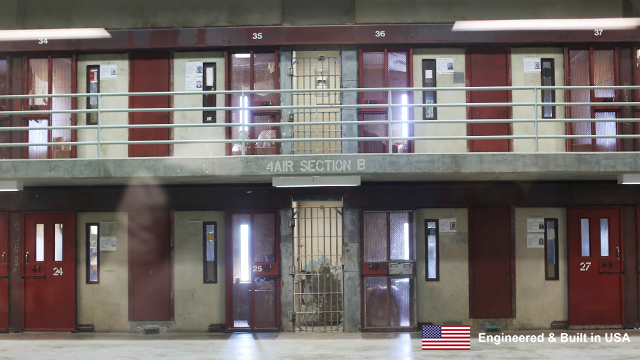
Walk a prison tier, and you learn quickly: hesitation is dangerous. Every sound echoes, every eye watches, and every mistake can ignite violence. For years, that was my reality as a corrections lieutenant.
Over 500 violent incidents crossed my path. Each one could have ended in blood on the floor. They didn’t—because the right systems, training, and vigilance made the difference.
What I didn’t expect was to see the same warning signs in hotels.
The environments couldn’t be more different—one behind steel doors, the other designed for comfort and leisure. Yet both share the same vulnerabilities:
Isolated staff (housekeepers in guest rooms, night auditors on empty shifts)
Unpredictable populations (strangers arriving daily, some intoxicated, some unstable)
Escalation triggers (alcohol, disputes, domestic violence spillover)
The difference? In corrections, ignoring these signals isn’t an option. In hospitality, they often go unnoticed—until someone gets hurt, or until Cal/OSHA launches an inspection asking for proof of compliance with SB 553 (California’s Workplace Violence Prevention law requiring hotels to maintain a WVPP, conduct role-specific training, and keep a violent incident log).
For California hotel operators, those requirements aren’t paperwork—they’re six-figure liabilities if ignored.
In corrections, survival depended on three truths:
1) Patterns always precede violence.
A slammed tray, unusual pacing, a sudden silence—small tells that predict major incidents. Hotels have the same signals: lingering guests, tense disputes, rising intoxication. The difference is whether your staff is trained to recognize and act on them.
2) Training must fit the role.
A control booth officer didn’t need the same drills as an escort officer. Likewise, housekeeping doesn’t need the same protocols as front desk. One-size-fits-all compliance webinars fail both. Real prevention demands role-based hotel safety training tailored to the work being done.
3) Logs aren’t paperwork—they’re intelligence.
Every incident report created a map of risk patterns. Without that log, leadership was blind. In hotels, the violent incident log required by SB 553 should be treated the same way—analyzed for patterns, audited regularly, and used to prevent repeat incidents.
Hotel A: Buys a generic template and runs a compliance webinar. Staff forget most of it within a week. Six months later, an incident occurs. The training records don’t hold up. The lawsuit does.
Hotel B: Builds a program tailored to their floor plan and staff roles. A front desk clerk spots early warning signs, follows a drilled protocol, and diffuses the situation. No lawsuit. No fines. Staff go home safe.
Same regulation. Different outcome.
A 92-room Southern California hotel logged multiple late-night lobby escalations. Instead of ignoring the data, they adopted structured protocols:
Front desk code phrases
Two-person handoff drills
15-minute weekly safety briefings
Within 90 days, incidents dropped 68%, and when Cal/OSHA conducted a surprise visit, the hotel’s audit-ready packet passed without issue.
That’s the difference between paper compliance and predictive prevention.
When I left corrections, I saw California Hotel Safety facing the same threats—but without the same tools. PreventIQ was built to change that.
Instead of generic templates, we deliver:
Property-specific Workplace Violence Prevention Plans aligned to your floor plan, shifts, and hot zones
Role-based hotel safety training (Front Desk / Housekeeping / Night Audit / F&B) with live expert Q&A
Structured incident logs that track behaviors, predict escalation, and prevent repeat problems
Weekly 15-minute drills—short enough to remember, strong enough to save lives
Bilingual, mobile-friendly training access so staff learn in real time
This isn’t compliance theater. It’s Proactive Safety Intelligence™—engineered to protect both people and property while passing any Cal/OSHA audit.
Hotels are under pressure like never before:
SB 553 enforcement is ramping up (permanent Cal/OSHA standard expected by Dec 31, 2026—audits are already underway)
Unions like Local 11 are demanding stronger protections and employee involvement
Insurance premiums and legal costs are climbing year over year
Turnover is draining operations and eroding institutional safety knowledge
Generic programs don’t solve these problems. In fact, they make them worse—because they create a false sense of security.
The solution isn’t theory. It’s systems. The kind I learned to trust where mistakes weren’t an option.
□ WVPP customized to your floor plan, shifts, and hot zones
□ Role curricula (Front Desk / Housekeeping / Night Audit / F&B) + attendance records
□ Violent incident log with time, role, location, precursor behavior, outcome + quarterly analysis
□ Worker feedback sessions documented (required under SB 553 worker involvement provisions)
□ Corrective actions tied to log trends
□ Drill cadence (15-minute weekly briefings) with sign-offs
If you can’t check every box today, your hotel is exposed to fines, lawsuits, and union pressure.
Does SB 553 apply to my hotel?
Yes. Nearly all California Hotel Safety must implement a Workplace Violence Prevention Plan, conduct training for all staff roles, and maintain a violent incident log.
Can I use a template to comply?
You can—but Cal/OSHA auditors expect property-specific plans and proof of worker involvement. Templates collapse under real audits and litigation.
What’s one step I can take this week?
Stand up a structured violent incident log and run a 15-minute drill with your night shift. It’s simple, powerful, and audit-proof when repeated consistently.
In corrections, the cost of generic training was measured in lives. In hotels, it’s measured in lawsuits, turnover, fines, and shattered trust.
Both are unacceptable.
That’s why PreventIQ exists: to bring maximum-security precision into hotel safety—without disrupting guest experience.
Because compliance doesn’t protect people. Systems do.
If you’re searching for SB 553 hotel compliance training, a California Workplace Violence Prevention Plan, or strategies to pass a Cal/OSHA hotel audit, you’ve found the solution built exclusively for hotels.
You can hope generic training gets you by. Or you can protect your staff, your guests, and your bottom line with a system built on hard-earned expertise.
Book an SB 553 Audit-Survival Strategy Call → We’ll map your WVPP gaps, build a real violent incident log, and design hotel-specific drills your staff can run in 15 minutes a week.
I’ve seen what happens when safety is treated as an afterthought. And I know what happens when it’s done right.
That’s the revolution PreventIQ is bringing to California hotels.